
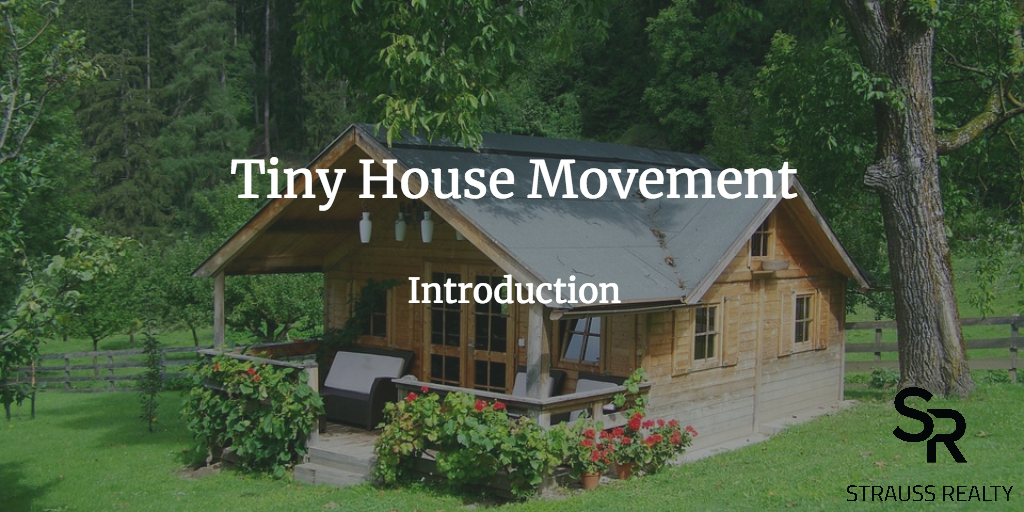
The Tiny House Movement is a great learning tool.
With many constraints on space and the premium price that space commands in cities like London, there is much to learn about scaling back the size of properties.
This series will delve into the "Tiny House Movement" that is spreading across the US and now into parts of Europe and Asia.
Firstly, let's look at what is considered a tiny house? Even though there is no set standard, the consensus is that 400sq.Ft (37sq.m) or less constitutes a tiny house.
There have been several stages that helped bring to life the tiny house movement, most notably the 2007/08 recession in the states where the mortgage crisis had many people reconsider their larger more opulent homes. In the years since many thousands of people have opted to move down in size to smaller, more economical, more efficient and also more environmentally friendly homes.
The popularity of Tiny Homes has risen extensively; several TV shows have been started to share the movement as well as masses of following for the movement in social media.
A quick google search netted 2.64 million results. YouTube has over 1 million videos on the subject and over 220 thousand videos of people showing off their homes in video tours.
Clearly, there is a lot of support and momentum behind this movement. In this series, we will explore what we can learn from this movement and how it may help with the housing problems in larger cities.
We will explore the Pro's the Con's and the stumbling blocks and success that people have had with their tiny house. I will also explore some developments that were completely built around the tiny house concept.
Kind regards,
Rian Strauss